Posted on Tuesday, December 2, 2025


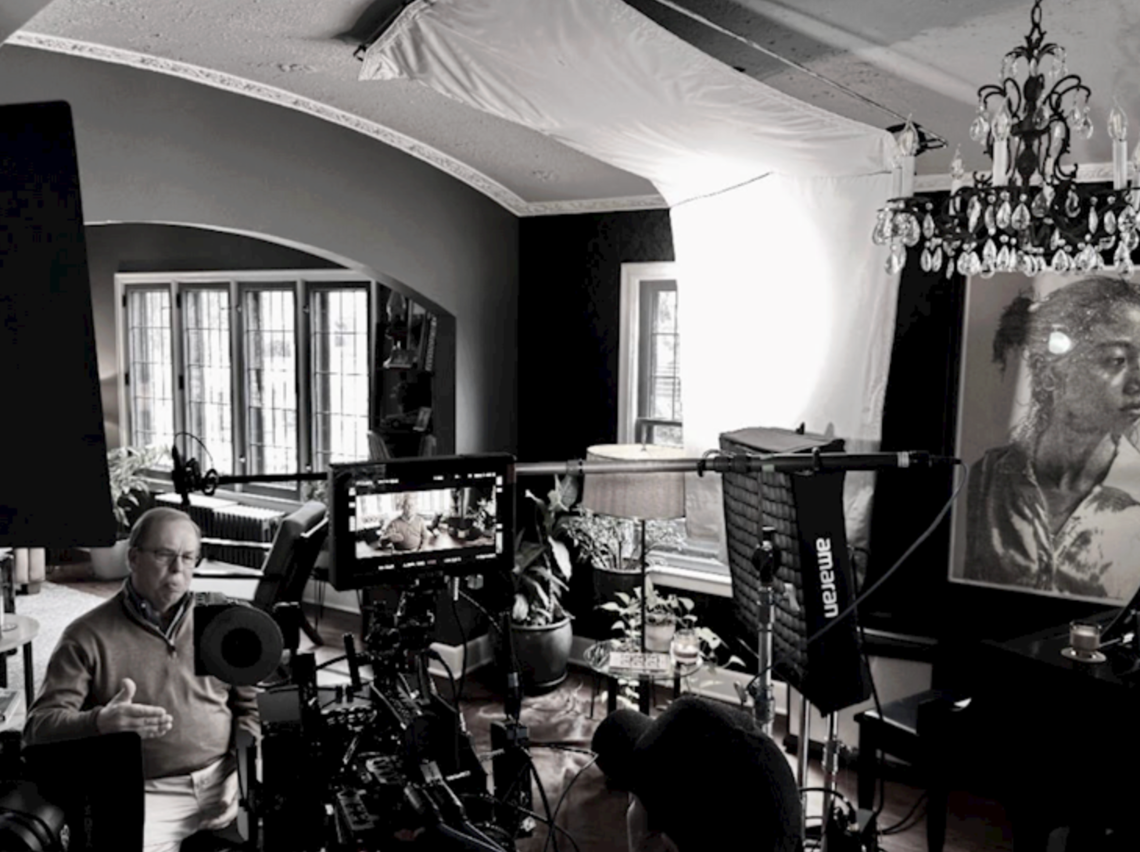
As AI-generated content floods feeds with polished imagery, audiences are searching for something far more meaningful: connection. Few creatives understand this shift better than Sarah Nix-Ward, whose work places authentic human experience at the center of every narrative. In an era where data, algorithms, and automation increasingly shape production decisions, Sarah champions a storytelling approach grounded in empathy, emotional depth, and genuine lived experience. In this interview, she unpacks the frameworks that keep her work emotionally resonant, explores the growing demand for authenticity, and explains why human-centered creativity is becoming a defining competitive edge in a tech-saturated landscape.
PH: Your work often puts authentic human experiences at the forefront. How do you define human-centered storytelling in today’s creative landscape?
Sarah Nix-Ward: There’s a variety of work out there, all with its own purpose, that is not human-centered but rather product-centered or brand-centered. When we talk about human-centered, we mean real stories or genuine portrayals of real stories, with people and their individual, unique experiences at the center. The content is always related to the end user experience, the human experience.
PH: What techniques or frameworks do you use to ensure stories remain emotionally grounded, even when data and technology dominate production decisions?
Sarah Nix-Ward: While the use of data and technology is vital to guiding our approach, strategy and production tools, the choice to utilize emotion is driven by the creative choices we hone through our framework.
We’ve developed a basic story framework that we use for each project. Along with story structure, we include emotional resonance points, specific character details and universal connection points. This helps us to vet each potential story or script to make sure it has enough emotional pull and depth to be interesting, engaging, and memorable.
PH: Many brands talk about “authenticity,” but few achieve it. What do you think separates genuine human storytelling from performative marketing?
Sarah Nix-Ward: The proof. Performative marketing can simply be a claim by a brand that they believe or support certain values. Genuine storytelling is a great way to prove or show that those claims are real and true.
It’s one thing for a brand to simply say they believe in something and quite another for that brand to actually show or represent that belief through great storytelling.
PH: How do you balance the tension between creating emotionally resonant narratives and meeting a client’s business or campaign objectives?
Sarah Nix-Ward: Emotion has been proven to help a viewer connect with the subject and remember it, so the well-timed use of emotion can bolster the business objectives, helping the campaign to work better than one lacking any emotion. Emotion is what ultimately makes a story interesting and human.
PH: Can you share a project where a human-centered approach transformed the outcome or audience response suddenly?
Sarah Nix-Ward: Working with a healthcare client, we created a campaign to promote their Cancer Care service line. Our approach included a series of real-person short stories called ‘Stories of Strength,’ along with a narrative commercial built around an individual character and her cancer journey. Rather than focus on the technology, the physicians, or the hospital system, both parts of the campaign were very intentionally human-centered.
This approach allowed viewers to see themselves or their loved ones as the main character, and it resonated deeply with a wide audience. That connection point helped to build trust with the audience, because both the stories and the narrative represented the journey respectfully and realistically, not shying from the hard part of the experience.
The engagement that resulted from the campaign not only exceeded the target metrics but also humanized the brand more than traditional, self-focused healthcare advertising. The campaign received a Gold Telly and was nominated for an Emmy.
PH: As AI tools rapidly reshape content creation, how do you see their influence impacting the emotional depth and relatability of storytelling?
Sarah Nix-Ward: For those of us in the live-action space, it’s very different from someone looking at it from an animation or only post-production lens. I think relying too heavily on AI tools can quickly reduce the emotional depth of content, because these tools are created based on generalities and the collective. And that’s something marketers and filmmakers have to be careful about. From our perspective, AI is like any other tool. There are ways to use it well, which improve projects, and ways to go overboard, so balance is key.
PH: We’re seeing an influx of AI-generated media that can feel polished but soulless. What risks do you think this poses for audience trust and engagement?
Sarah Nix-Ward: Audiences are smart. And they learn quickly who to trust and who not to trust. That trust translates directly into sales and other performance metrics. Right now, people are hyper-aware of ‘fakes,’ so I think if a brand is going to lean heavily into AI-generated media, it’s better to disclose it rather than hide it or pretend those tools were not used.
There is a lot of really cool and engaging AI-generated media, which works well for brands, and that’s great. But I think when it comes to representing people and their stories, audiences gravitate toward real, human-created/centered content.
PH: In your view, what kinds of stories—or creative voices—are most needed right now to cut through AI fatigue?
Sarah Nix-Ward: The type of story and voice is going to be different for each brand and initiative. And I think a wide range of different stories and voices are needed because that’s what our world is made of. The more real, the more true, the more human, the better.
What we don’t need is more voices just repeating the same thing because someone else did and it sounded good. I think the world needs and craves voices brave enough to be themselves and celebrate that uniqueness. PH: How can human storytellers use AI responsibly as a tool rather than a replacement for creativity?
Sarah Nix-Ward: I think it boils down to just that: using AI as a tool but not a replacement. AI is now another type of crayon in the box of colors, and there are a lot of ways in which it can help streamline previously tedious (or less creative) parts of the process.
If we use the tool with good intentions and always keep the integrity of any project intact, I believe that’s appropriate. There’s also the saying, “What doesn't get used will whither.” We certainly don’t want our own creative skills and engagement to fade because we’re trying to outsource it to a machine.
PH: What advice would you give emerging creatives who are trying to maintain humanity in their work while navigating AI-driven workflows or expectations?
Sarah Nix-Ward: AI-driven workflows can help streamline the tedious things and speed up some of the slower parts of the process, actually giving people back time to focus on the story. But it does present a challenge as well. I think knowing when to lean into AI and when to lean into analogue is important, and there is not one right answer. It’s like anything else: balance is paramount.
PH: Do you think the growing demand for authenticity will push the advertising and entertainment industries toward a more purpose-driven era?
Sarah Nix-Ward: Yes - We’re living in a world where there are so many choices on where to spend your money and to which brands to give your loyalty. Brands that create content in a purpose-driven manner, in alignment with their own brand values, will do a better job of attracting loyal customers who also share those principles.
PH: Looking ahead, what role do you think empathy will play in the creative process—and how might it become a competitive differentiator in a world saturated by machine-made content?
Sarah Nix-Ward: Empathy has always played a key role in the creative process. It’s what separates humans from other animals, allows us to see people in unique ways, and allows us to create things that others can feel. I think the challenge now, as we are all inundated by tech and have less in-person interaction, is not to lose sight of empathy as important. So, yes, the creators who are keenly aware of that will have an advantage over those who are not.

Recent Blog Posts
How ProductionHUB Helped DP Willie Shaw Land His Dream Shoots in Seattle
Posted on 11/25/2025
The Real Cloud Strategy in Post: Flexibility, Not Absolutes
Posted on 11/4/2025
The Cinebot Mini Goes Back To School
Posted on 10/21/2025
How Streaming and Hybrid Delivery Are Disrupting Traditional Broadcast Models
Posted on 10/14/2025
Broadcasters Tackle AI, Sports and Next-Gen Workflows at NAB Show New York
Posted on 10/7/2025
